
Data Management Training: a suite of programs based on DAMA-DMBOK
Our data management training is built entirely around the DAMA Data Management Body of Knowledge — the internationally recognized framework for enterprise data management. The suite starts with a two-day Fundamentals program, followed by seven one-day specialty courses, each preparing participants for the corresponding official DAMA exam.
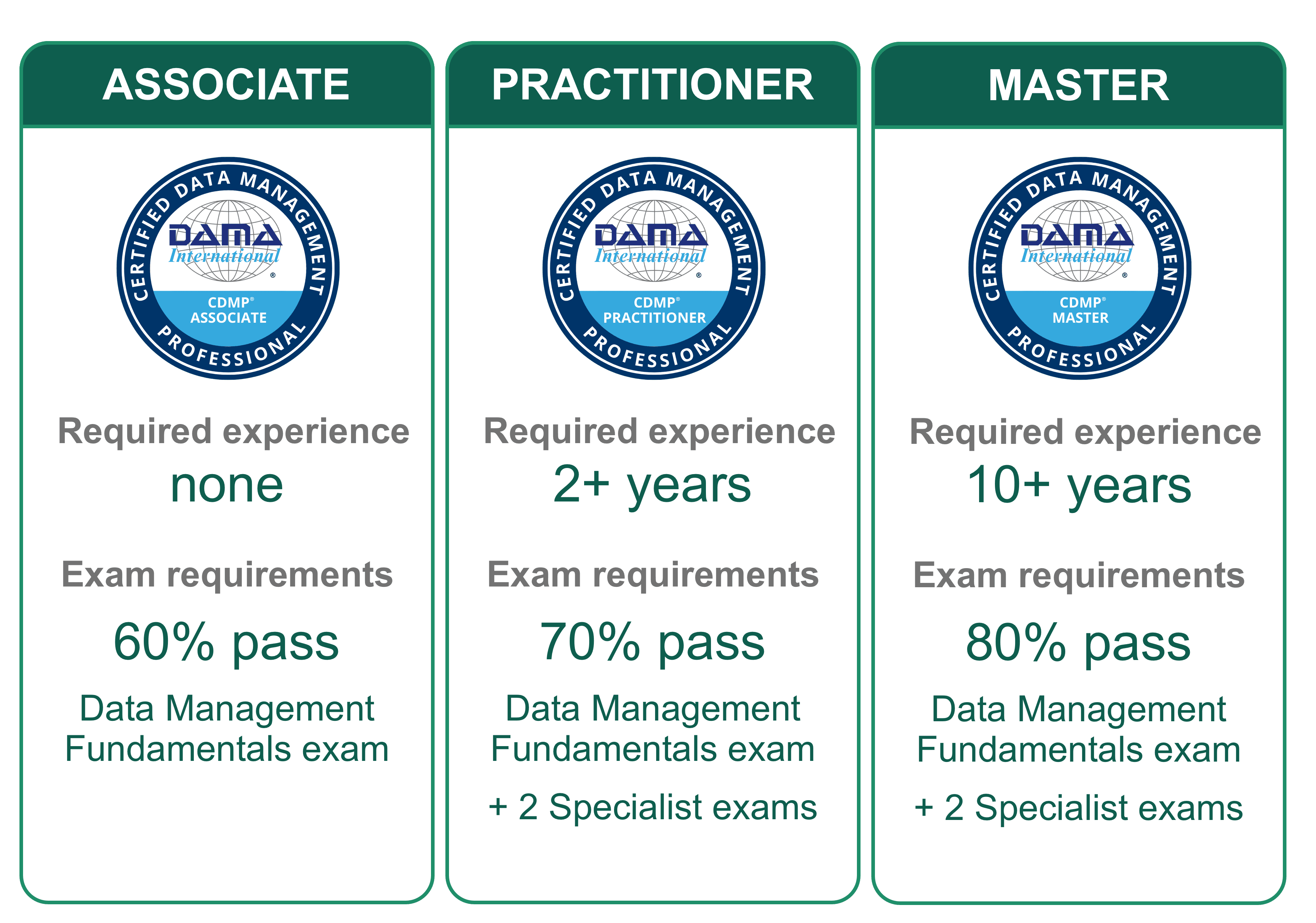
How the training suite is organized
The program follows a clear progression: start with the Fundamentals to build a solid foundation across all DAMA-DMBOK knowledge areas, then deepen expertise through targeted specialty courses.
Data Management Fundamentals
2 days · Covers all DAMA-DMBOK knowledge areas · Prepares for the DAMA Fundamentals exam
Specialty Courses
7 courses · 1 day each · Each prepares for its DAMA specialty exam · Can be attended independently
Based on DAMA-DMBOK: The Data Management Body of Knowledge is the internationally recognized standard for enterprise data management disciplines. All Nova Silva courses follow its structure directly, ensuring that participants build knowledge that is both exam-ready and immediately applicable in their organization.
Data Management Fundamentals
The recommended starting point for everyone entering the DAMA training suite. This two-day program provides a comprehensive introduction to all knowledge areas in the DAMA-DMBOK framework.
This two-day program introduces all core DAMA-DMBOK knowledge areas: data governance, data architecture, data modeling, data quality, metadata management, reference and master data, data warehousing and BI, and data integration. Participants gain both a conceptual understanding and practical grounding in enterprise data management — the foundation needed for any specialty course.
- Introduction to the DAMA-DMBOK framework and its knowledge areas
- Preparation for the DAMA Fundamentals certification exam
Seven one-day specialty trainings
Each specialty course provides an in-depth treatment of a single DAMA-DMBOK knowledge area and prepares participants for the corresponding DAMA specialty exam. Courses can be attended independently or combined with the Fundamentals program.
Data Governance
Governance structures, data ownership, stewardship models, decision rights, and accountability frameworks for enterprise data management.
Data Integration & Interoperability
Data movement, consolidation, virtualization, and federation across systems — ensuring consistent and reliable data flows throughout the organization.
Data Modelling & Design
Conceptual, logical, and physical data models — techniques, notation standards, and best practices for designing data structures that support governance and quality.
Data Quality Management
Defining, measuring, and improving data quality — quality dimensions, profiling, rules, remediation workflows, and embedding quality ownership in the organization.
Metadata Management
Managing business, technical, and operational metadata — data catalogs, metadata repositories, lineage, and strategies for making metadata discoverable and trustworthy.
Reference & Master Data
Managing shared, authoritative data assets — code lists, classifications, and golden records — consistently across systems and organizational boundaries.
Data Warehousing & BI
Data warehouse design, ETL/ELT processes, dimensional modeling, and business intelligence environments — including governance and quality considerations in analytical platforms.
Every Nova Silva trainer holds an official DAMA certification. This means participants learn from professionals who have not only studied the DAMA-DMBOK framework but have demonstrated their expertise through the same certification process they are helping others prepare for. It ensures consistent quality, practical credibility, and training grounded in real-world application.
What participants will be able to do
Across the full suite, participants build both broad and deep data management expertise — from a strong DAMA-DMBOK foundation through specialist certification in their domain.
Understand the full DAMA-DMBOK framework and apply it to their organization's data management context
Prepare for and pass the DAMA Fundamentals exam after completing the two-day Fundamentals training
Prepare for and pass specialty exams in targeted DAMA knowledge areas
Design and implement governance, quality, and metadata practices grounded in international standards
Build a common data management language across teams, enabling more effective collaboration and decision-making
Strengthen data management maturity in a structured, measurable way aligned with DAMA standards
Who this training is designed for
Designed for professionals who are responsible for — or contribute to — enterprise data management in any of its disciplines.
Data and platform teams
Teams responsible for data governance, architecture, quality, and integration who want a structured, certified framework.

Data managers and data owners
Professionals accountable for data domains who need formal grounding in governance, quality, and reference data management.
DAMA certification candidates
Professionals preparing for DAMA Fundamentals or specialty exams who want structured, expert-led preparation.
Leaders driving data maturity
Executives and program leads who want their teams to build certified, internationally recognized data management competencies.
Flexible delivery options
Individual courses or the full suite — delivered to fit your organization's schedule, team, and priorities.

In-company training
Delivered on site or online for your data and platform teams, tailored to your governance context and data environment. Individual courses or the full suite.
Online in-person training
Interactive sessions delivered remotely, combining live instruction by DAMA-certified trainers with structured exercises and exam preparation.
Tailored programs
Custom learning paths combining Fundamentals with selected specialty courses, aligned to your team's roles, maturity level, and certification goals.
Ready to build certified data management expertise?
We are happy to discuss which courses fit your team's roles and certification goals — whether that's starting with Fundamentals or combining selected specialty courses.